

Winter Survival on the Edge of the Atlantic
Along the Massachusetts coast, Plum Island and the surrounding Great Marsh form a demanding but remarkably productive winter landscape. The barrier beach, tidal salt marshes, creeks, pools, mudflats, and adjacent waters create a linked refuge along the Atlantic Flyway, where birds can move between feeding grounds and shelter as conditions change. For field naturalists, the important point is not simply the number of species present. It is the way a varied coastal system distributes food, cover, and thermal options across a relatively compact area.
Winter on the outer coast imposes several stresses at once. Sub-zero gusts increase convective heat loss, coastal squalls reduce visibility and feeding time, and freezing conditions can seal inland ponds and shallow freshwater wetlands. Tides, however, continue to move through the estuary, preserving access to some aquatic prey even when exposed surfaces ice over. The resulting microclimates reduce the energetic cost of survival for both resident birds and migrants from higher latitudes. A bird that can shift from an exposed beach to a sheltered thicket, or from a frozen marsh edge to a flushed tidal creek, gains more than cover. It gains a practical way to balance calories, body temperature, and risk during the most expensive season of the year.
The Dual-Zone Refuge of Dunes and Estuary
Plum Island”s barrier beach presents two sharply different winter environments. Primary dunes and open beaches are exposed to wind, salt spray, blowing sand, and rapidly changing temperatures. Their openness is valuable for species that need broad sightlines, including Snowy Owls, Snow Buntings, Horned Larks, and several shorebirds. It also makes these areas energetically costly. A bird standing or hunting in a persistent onshore wind must spend more energy maintaining body temperature, particularly when food is sparse.
Just landward of the most exposed dunes, maritime thickets and dune swales create a different set of conditions. Shrubs, low trees, and uneven terrain interrupt wind flow, trap pockets of warmer air, and provide escape cover from raptors and mammalian predators. These sheltered bands are not uniformly warm, but they can reduce wind chill enough to make resting and feeding more efficient. The distinction is especially important after a nor”easter, when exposed sand may be scoured clean while berries, seeds, and invertebrates remain available in protected vegetation.
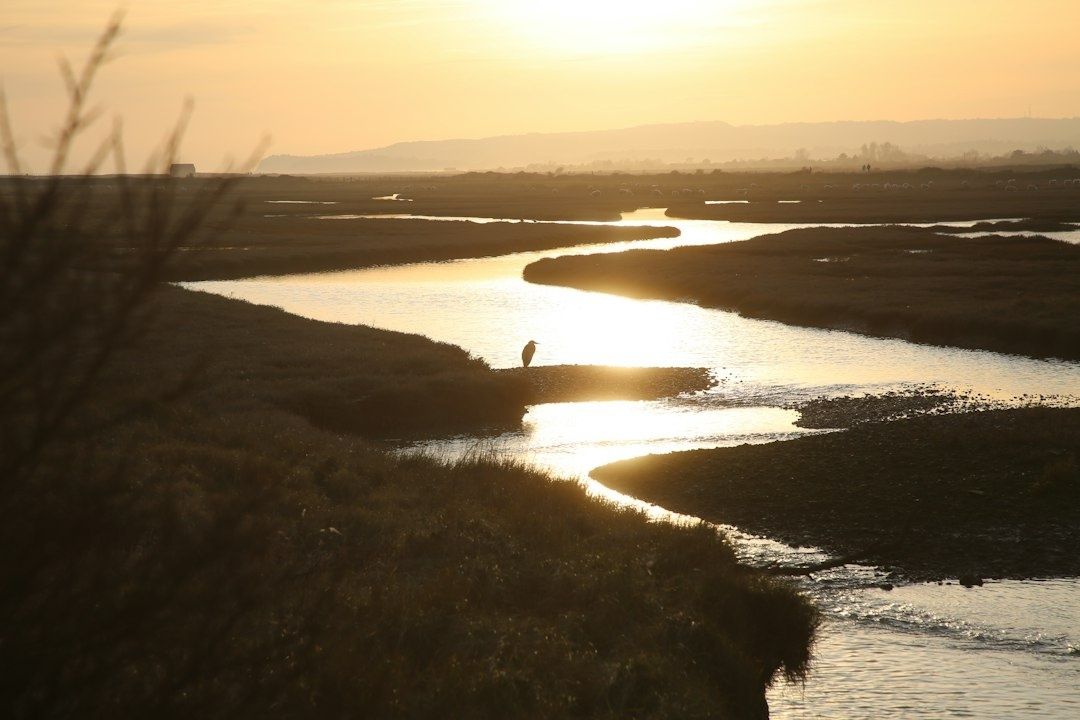
The estuarine side supplies another form of refuge. Salt pannes, tidal pools, mudflats, and creeks can remain partly open because saline water has a lower freezing point than fresh water and because tidal exchange continually brings in moving water. This does not prevent all ice formation. Shallow edges and stagnant pools may freeze, especially during prolonged cold. Even so, rapid flushing and deeper channels often preserve access to benthic invertebrates, small fish, bivalves, and aquatic vegetation when inland wetlands are inaccessible. The ecological value lies in this patchwork of partially frozen and open water, not in any single pool.
| Habitat band | Winter conditions | Primary value for birds |
|---|---|---|
| Exposed foredunes and beach | High wind, salt spray, blowing sand, limited cover | Open hunting views, beach perches, seeds, small prey, and resting space for coastal specialists |
| Leeward dune thickets | Reduced wind exposure, denser vegetation, localized thermal buffering | Shelter, berries, seeds, roosting cover, and protection during storms |
| Salt pannes and tidal pools | Variable ice cover, saline water, intermittent tidal flushing | Access to aquatic prey and shallow-water feeding opportunities |
| High marsh and tidal creeks | Open sightlines, cold winds, channels with moving water | Rodent hunting, waterfowl foraging, communal roosting, and movement corridors |
Conditions can change quickly over a single tide cycle, so winter exploration benefits from current refuge information rather than assumptions based on a previous visit. The Parker River National Wildlife Refuge offers nature-based programs throughout the year, including seasonal field trips and public workshops led by staff, volunteers, and partners. Programs are free, but registration may be required and capacity can be limited. Checking official listings before traveling is a practical step, particularly when weather or management needs affect access.
Raptor Foraging Dynamics Across the Open Marsh
The broad high marsh resembles tundra in its visual structure: low vegetation, open horizons, scattered pools, and few places for prey to hide. That similarity helps explain why it attracts northern predatory specialists during winter. Northern Harriers quarter low over the marsh, often flying with wings held in a shallow dihedral while listening and watching for rodents. Rough-legged Hawks use exposed perches and hovering flight to search for small mammals. Snowy Owls may sit on dunes, wrack lines, posts, or elevated ground, scanning for rodents and birds across open terrain.
Snowy Owl movements are especially variable. These Arctic birds generally reach Massachusetts from November through April, but annual numbers depend on conditions in the Arctic, including prey availability, snow and ice patterns, and breeding-season success. Many wintering individuals are young birds, and open coastal grasslands and salt marshes provide a useful substitute for treeless tundra. The Snowy Owl species profile from Massachusetts describes the species” Arctic ecology, variable movements, feeding behavior, and conservation concerns.
Raptor hunting is not constant. Severe weather can force birds into lower-energy strategies, such as waiting from a sheltered perch or using a protected dune edge. During daylight, the open marsh can support active searching, while periods of poor visibility may shift activity toward the margins of pools, creeks, and vegetation. A freeze can also change prey behavior. Small mammals may move beneath snow or dense thatch, concentrating around warmer vegetation, seed-rich patches, or tidal margins. Raptors respond to these changes by adjusting flight height, perch selection, and the amount of time spent hunting.
- Northern Harriers use low, deliberate flights and sound as well as sight to locate prey in marsh vegetation.
- Rough-legged Hawks exploit elevated perches and wind-assisted hovering over open country.
- Snowy Owls combine acute vision, powerful hearing, and extensive feathering with flexible day and night activity.
- Short-eared Owls and other marsh raptors may concentrate where rodents move through grassland edges and dike-side vegetation.
For observers, distance is part of sound field practice. Approaching or surrounding a resting owl can force it to fly, spending energy that may be needed for thermoregulation and hunting. Ethical guidance for Snowy Owls recommends remaining at least 50 yards away, observing from one location, and retreating when the bird becomes visibly alert. Open habitats make birds appear easy to approach, but that visibility should not be mistaken for tolerance.
Waterfowl Strategies in Freezing Tidal Creeks
Waterfowl use Plum Island Sound, tidal creeks, salt pans, and nearby shallow waters according to depth, salinity, tide stage, and food availability. Diving ducks can reach prey below the surface, while dabbling ducks exploit shallow margins, exposed mud, and plant material. Sea ducks and other coastal specialists are particularly well suited to waters that remain productive after small inland ponds have frozen. Bivalves, benthic invertebrates, small aquatic animals, and maritime seeds provide dense sources of energy, although obtaining them can require repeated dives, probing, or concentrated feeding.
Cold-weather waterfowl management is fundamentally a bioenergetic problem. Birds must replace calories spent swimming, diving, flying between feeding areas, and maintaining body temperature. Communal roosting can reduce exposure by allowing birds to select sheltered water or dense groups rather than isolated positions along a wind-swept shore. Flocks also provide many eyes for detecting predators. During bitter onshore winds, birds may shift toward creek bends, lee shores, or deeper channels where water movement and surrounding landforms reduce wave action.
- Use deeper tidal water when shallow freshwater habitats become sealed by ice.
- Concentrate feeding around mudflats and creek edges as tides expose benthic prey.
- Move between feeding areas and sheltered roosts to limit prolonged exposure.
- Flock closely when conditions make individual vigilance and heat retention more difficult.
Passerine Shelter in Leeward Dune Thickets
Small birds face a particularly narrow winter energy margin because their high surface-area-to-volume ratio causes rapid heat loss. Horned Larks and Snow Buntings can forage in open beach and dune habitats, where windblown seeds and exposed ground offer opportunities even in cold weather. Yellow-rumped Warblers may persist where sheltered vegetation supports insects, fruit, or other food, especially during milder intervals. Their survival depends on repeatedly locating small, energy-rich resources rather than relying on one large feeding event.
Maritime shrublands provide both food and structure. Bayberry drupes, rose hips, and salt-grass seed heads can remain available after many herbaceous plants have senesced. Dense stems interrupt wind and create protected pockets for resting, while snow and sand can insulate the ground layer. During a coastal nor”easter, these thickets become more than attractive birding habitat. They function as thermal buffers that allow small passerines to reduce exposure while preserving access to forage. Disturbance matters here because repeated flushing can force birds away from the very cover that helps them survive.
Protecting Plum Island Fragile Winter Corridors
Plum Island”s winter importance comes from connectivity. Dunes provide open hunting terrain and beach food; thickets supply wind shelter and fruit; marshes offer rodents, seeds, and roosting space; tidal creeks and sound waters preserve aquatic feeding opportunities. If one habitat band is degraded, birds may lose the ability to move efficiently between food and shelter. That can increase flight costs, reduce feeding time, and make extreme weather more dangerous even when suitable habitat remains elsewhere in the landscape.
Winter wildlife viewing should therefore be planned around the birds” energy budgets. The clearest signal of responsible observation is restraint: stay on designated routes, keep a generous distance from raptors and resting flocks, avoid blocking escape paths, and leave when birds show repeated alert behavior. A reliable field visit also begins with practical preparation, including warm clothing, optics, weather awareness, and a check of current refuge conditions. Programs, access rules, and closures can change, so official refuge information should guide every visit.
- Check conditions before departure. Review refuge notices, program requirements, weather, and access information rather than relying on an older report.
- Choose observation points carefully. Use established overlooks, trails, beaches, and viewing areas, and avoid entering sensitive vegetation or roosting zones.
- Protect resting birds. Remain at least 50 yards from Snowy Owls when possible, do not encircle wildlife, and retreat at signs of agitation.
- Support habitat stewardship. Participate in approved programs, follow refuge regulations, report hazards responsibly, and support conservation organizations working on coastal wetlands.
- Record observations responsibly. Share useful sightings without publishing precise locations of vulnerable birds when increased attention could create disturbance.
Maintaining these winter corridors is not only a matter of preserving scenic coastline. It is a practical investment in the ecological flexibility that birds need as storms intensify, freeze patterns shift, and food becomes less predictable. Intact dunes, marshes, thickets, and tidal waters give wildlife room to choose the next safe place. That choice, repeated across thousands of birds and countless winter days, is what makes Plum Island and the Great Marsh such a vital refuge on the Atlantic edge.