

Restoring Coastal Foodways in Massachusetts
Along the Massachusetts coast, Wampanoag foodways represent far more than a collection of traditional recipes. They are systems for reading tides, managing soil, protecting spawning habitat, storing seasonal abundance, and maintaining reciprocal relationships with land and water. Across estuaries, salt marshes, freshwater margins, and nearshore waters, generations of Indigenous stewards developed practical forms of ecological engineering that converted changing coastal conditions into dependable sources of food.
That knowledge is especially relevant as climate disruption brings stronger storms, shifting fish distributions, saltwater intrusion, erosion, and increasingly unpredictable growing seasons. Traditional ecological knowledge does not offer a single technology to copy without adaptation. It offers a method: observe local systems closely, work with natural cycles, diversify production, and preserve community authority over food resources. The cultural revival underway across Wampanoag communities, including educational gatherings, language work, harvesting instruction, and youth programming, shows that food sovereignty is both an environmental and political project. The 2024 November Mittark – Mashpee Wampanoag Tribe documents this broader work through its coverage of cultural preservation, environmental stewardship, education, and community participation.
Hydraulic Engineering of Tidal Fish Weirs
Tidal fish weirs are best understood as low-energy hydraulic systems. Rather than pursuing fish with powered vessels or large nets, a weir uses the predictable movement of water to guide fish into a capture area. In a coastal bay or tidal creek, stakes, stones, brush, or woven materials can be arranged across part of an intertidal channel. As the tide advances, fish move through openings or along the barrier. As water drains, the structure concentrates movement toward a confined pocket where selected fish can be harvested.
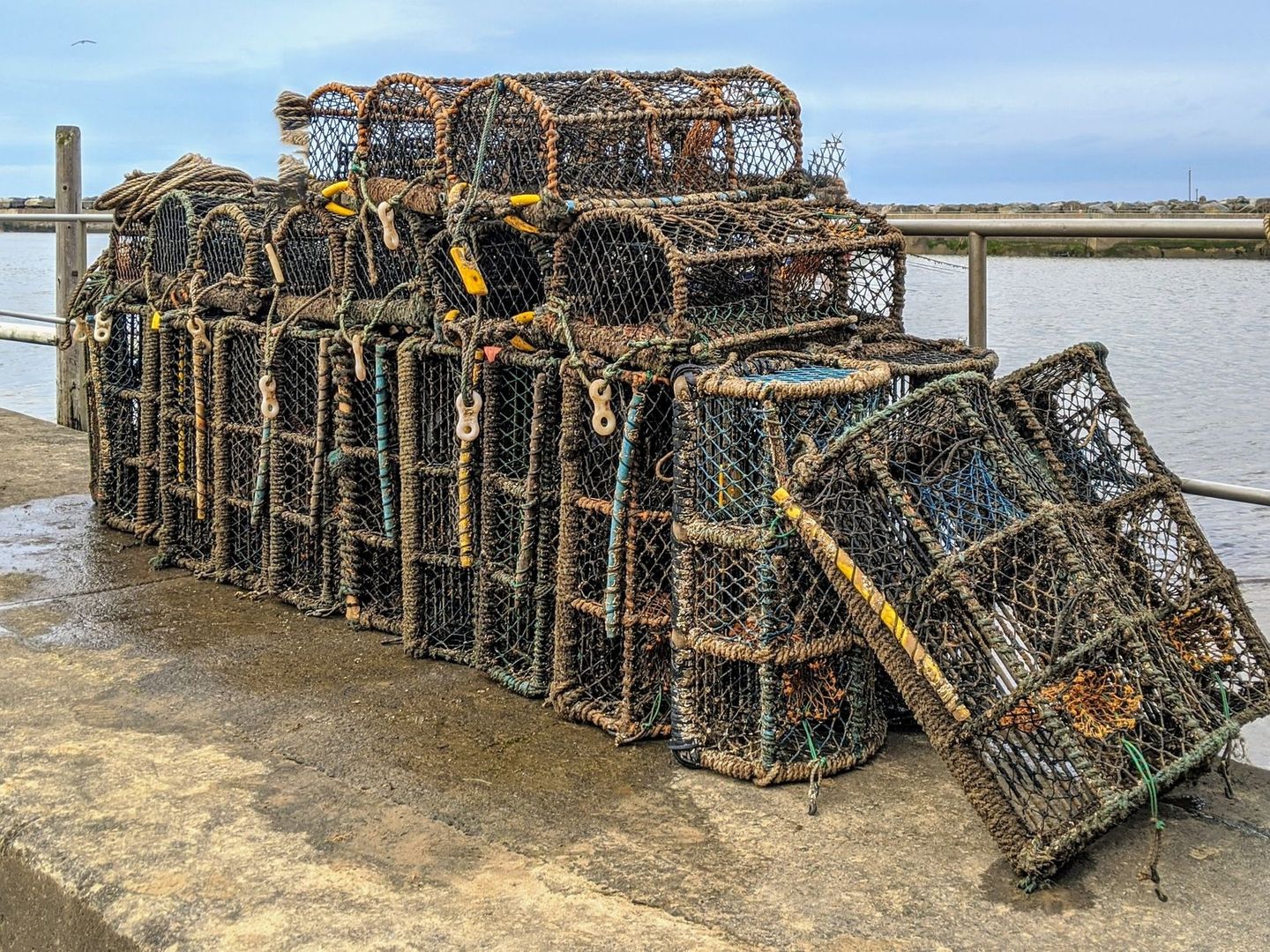
The engineering depends on careful placement. A barrier that blocks an entire channel would be ecologically damaging and difficult to maintain, while a partial alignment can create a funnel that works with the tide. The height, spacing, and permeability of the structure determine how water flows and which fish are retained. A weir can therefore be adjusted to local bathymetry, seasonal water levels, target species, and the behavior of migrating fish. Intertidal stake alignments, stone features, and woven brush barriers reported in archaeological discussions point to a material culture built around repeated observation and maintenance, although interpretations must remain tied to documented site evidence rather than assumptions about any single structure.
Selective harvesting is central to the system’s resilience. A partially open weir can allow smaller fish, non-target species, and some breeding adults to pass, while making larger or more abundant runs accessible during appropriate tides. This differs fundamentally from industrial fishing methods that may remove fish across broad areas and require substantial fuel, vessel infrastructure, and processing capacity. The comparison below describes general system characteristics, not a claim that every historical weir used identical dimensions or rules.
| Feature | Tidal fish weir | Modern industrial fishing trap |
|---|---|---|
| Energy source | Natural tidal movement | Often dependent on powered vessels, hauling gear, and mechanical handling |
| Structure | Stakes, stone alignments, brush, or woven barriers adapted to local shore conditions | Manufactured nets, cages, lines, anchors, and standardized hardware |
| Harvest pattern | Small-area, tide-timed capture with potential for selective removal | Commercial-scale capture designed for high throughput |
| Maintenance | Frequent local repair using available materials and ecological observation | Equipment servicing, vessel access, and industrial supply chains |
| Ecological risk | Reduced when openings, seasons, and harvest quantities protect migration and breeding | Varies by gear type, regulation, bycatch levels, and stock condition |
Companion Agroecology and Coastal Soil Enrichment
The Three Sisters system, combining maize, climbing beans, and squash, demonstrates agronomic architecture rather than simple crop mixture. Maize provides a living trellis for beans. Beans form relationships with nitrogen-fixing bacteria that can contribute usable nitrogen to the soil. Squash spreads across the ground, shading soil, suppressing weeds, and reducing moisture loss. The USDA National Agricultural Library describes the system’s practical and cultural importance among numerous Indigenous nations, while emphasizing that its meaning extends beyond the small garden plots often presented in simplified accounts.
In coastal settings, crop diversity can be paired with careful nutrient cycling. Shell deposits and fish remains may contribute calcium, phosphorus, nitrogen, and organic matter when incorporated appropriately into soils. Herring and other marine nutrients can function as slow-release fertility sources, although modern application must account for contamination, local regulations, salinity, decomposition rates, and the risk of nutrient runoff. The aim is not to treat the sea as an unlimited fertilizer warehouse. It is to reconnect land and water cycles while keeping harvest levels within ecological limits.
Polyculture also creates physical protection for vulnerable coastal topsoil. A single crop leaves large periods or spaces exposed to wind and intense rainfall. In contrast, maize creates vertical structure, beans occupy the climbing layer, and squash forms a low ground cover. Multiple root depths can improve soil aggregation and water infiltration, while living cover helps reduce erosion. The approach also buffers microclimate: dense foliage can reduce wind exposure, retain humidity near the soil surface, and moderate temperature swings during unpredictable spring conditions. Research and practical guidance on companion planting identify nitrogen fixation, trap cropping, weed suppression, and ground cover as mechanisms that can be adapted to both gardens and larger agricultural systems.
- Layered structure: Tall maize, climbing beans, and spreading squash use different vertical and horizontal spaces.
- Biological fertility: Legumes can support nitrogen cycling through symbiotic relationships with soil bacteria.
- Soil protection: Squash leaves shade the surface and reduce exposure to wind, rain impact, and evaporation.
- Risk distribution: Several crops reduce dependence on one harvest during drought, cold snaps, pest outbreaks, or storm damage.
- Local adaptation: Planting dates, mound design, crop varieties, and marine amendments must be adjusted to soil, latitude, drainage, and cultural practice.
Community Initiatives and Living Culinary Heritage
Food sovereignty becomes durable when knowledge is transmitted through active community institutions rather than displayed only as historical information. Cultural centers, tribal gatherings, language programs, family events, and harvesting workshops can connect ecological practice with identity and governance. The Aquinnah Cultural Center’s 2026 events listing illustrates this range, including cultural gatherings, historical programs, foodways activities, professional-development sessions, language reclamation work, and workshops addressing Indigenous representation and the myths surrounding the 1621 Thanksgiving narrative.
Tribal newsletters and assemblies provide another practical layer of coordination. They can publicize volunteer opportunities, education programs, environmental stewardship efforts, youth activities, and committee participation. This matters because food systems require more than individual skill. They require access to land and water, shared schedules, intergenerational teaching, storage, processing, transportation, and decision-making authority. Community documentation also makes cultural work visible as ongoing governance rather than a performance for outside audiences. The Mashpee Wampanoag Tribe’s community stewardship updates show how cultural preservation, youth and elder programs, education, health, and environmental work can reinforce one another.
Indigenous chefs and food educators help carry these principles into wider regional food systems, but responsible collaboration requires context and consent. Seasonal menus can highlight local fish, shellfish, berries, roots, grains, and cultivated crops without reducing Wampanoag foodways to a list of ingredients. Workshops for young people can teach when to harvest, how to recognize maturity, how to preserve food through drying or other community-approved methods, and why restraint matters. The most reliable programs connect hands-on practice with language, history, land access, and the responsibilities attached to harvesting.
- Seasonal harvesting lessons can align ecological observation with cultural calendars.
- Preservation workshops can reduce waste and extend access to short-lived harvests.
- Language reclamation strengthens the vocabulary needed to describe plants, places, relationships, and responsibilities.
- Youth and elder programs create two-way learning, combining inherited knowledge with contemporary monitoring tools.
- Public education should distinguish genuine cultural participation from appropriation and should respect tribal control over restricted knowledge.
Expanding Institutional Access and Food Sovereignty Funding
Modern food sovereignty also depends on infrastructure. A community may have knowledge of shellfish propagation, fishing, cultivation, or preservation but still lack cold storage, inspected processing capacity, transportation, reliable markets, or facilities for teaching. Massachusetts Food Security Infrastructure Grants for fiscal year 2026 supported a broad set of organizations, municipalities, schools, farms, fisheries, and community providers. Listed projects include seafood processing, onboard freezing, shellfish propagation, climate-resilient farm storage, grain production, food waste reduction, scratch-cooked meals, food pantries, and access to culturally relevant local food.
Funding mechanisms work best when they support the entire chain from ecological production to community access. Institutional partnerships can connect tribal governments, municipalities, schools, fisheries, farms, cultural organizations, and technical advisers while preserving tribal authority over cultural knowledge and harvesting practice. Public access to heritage programming is another important bridge. The Massachusetts Department of Transitional Assistance and Mass Cultural Council explain how the EBT Card to Culture Organizations program provides free or discounted admission to participating cultural institutions for eligible residents, with listed discounts valid through December 31, 2026.
- Build planning partnerships: Establish agreements among tribal entities, local governments, food producers, educators, and conservation programs before infrastructure decisions are finalized.
- Fund practical capacity: Prioritize cold and dry storage, safe processing, transport, shellfish and fish handling, seed access, and facilities suitable for teaching.
- Protect cultural governance: Use consent-based protocols for documentation, exhibitions, recipes, harvesting sites, and educational materials.
- Remove access barriers: Use benefit-linked cultural admission programs, transportation support, sliding-scale workshops, and clear public information to broaden participation.
- Measure resilience: Track food access, soil health, habitat condition, participation, waste reduction, and the continuity of intergenerational knowledge rather than relying on production volume alone.
Building Climate Resilience Through Indigenous Engineering
Coastal Wampanoag food systems reveal precision in places that can appear informal to modern observers. A brush barrier can encode an understanding of tidal hydraulics. A planting mound can coordinate root depth, shade, nutrient exchange, and water retention. A seasonal harvest rule can function as a biological safeguard for future abundance. These are not relics of a static past. They are adaptive systems whose value lies in observation, feedback, diversity, and accountability to community and ecosystem.
Regional planners and agricultural practitioners can apply the underlying principles without extracting or copying practices out of context. Practical next steps include supporting Indigenous-led stewardship, restoring access to culturally significant lands and waters, testing polyculture designs suited to local soils, expanding low-impact shellfish and fish infrastructure, and funding youth programs that unite ecological monitoring with cultural education. Climate resilience becomes more credible when it is measured not only by engineering specifications, but also by who controls food resources, who can participate, and whether the next generation has the knowledge and authority to care for the coast.